
Tell us the ID is wrong. Get paid in credits.
No identification pipeline is right every time. The difference is whether the miss goes anywhere. Flag it from the card edit page in about ten seconds, and we add 2 non-expiring identification credits to your account for the trouble.
Right Where You Catch It
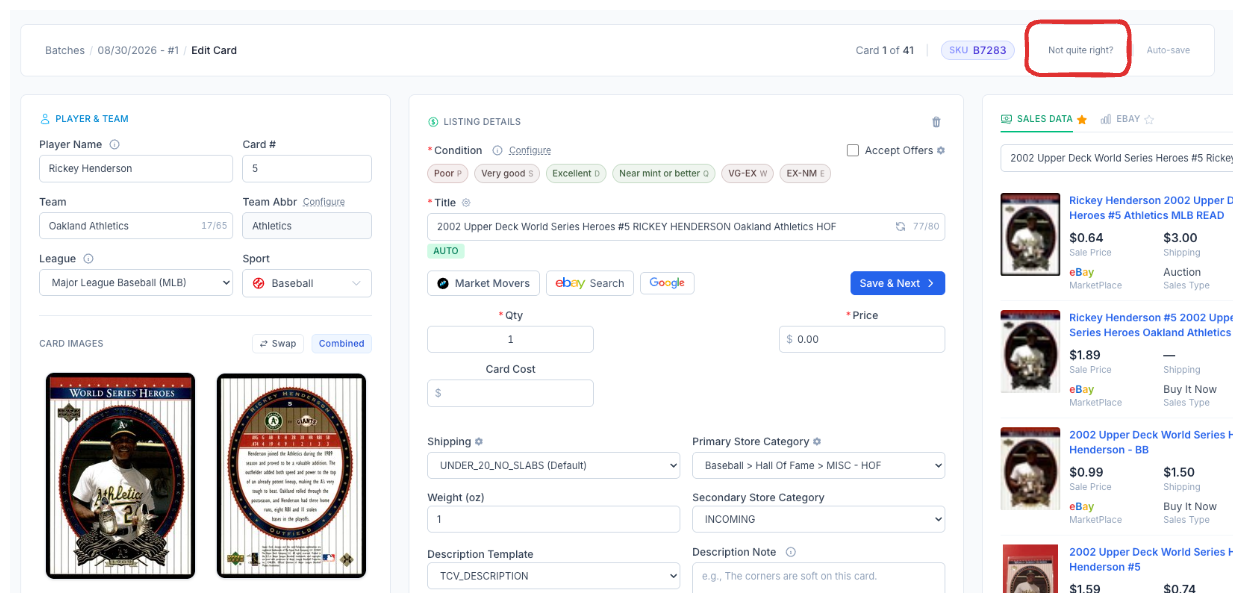
Not quite right? sits in the header of the card edit page, next to the SKU and the auto-save indicator. You are already looking at the card when you notice the year is off or the parallel is wrong. That is the moment the report is worth filing — not later, from memory, in a support email.
Fix the card and keep listing. Reporting it does not block you, change your data, or slow the batch down.
Click image to view full size
Say What’s Off, in Ten Seconds
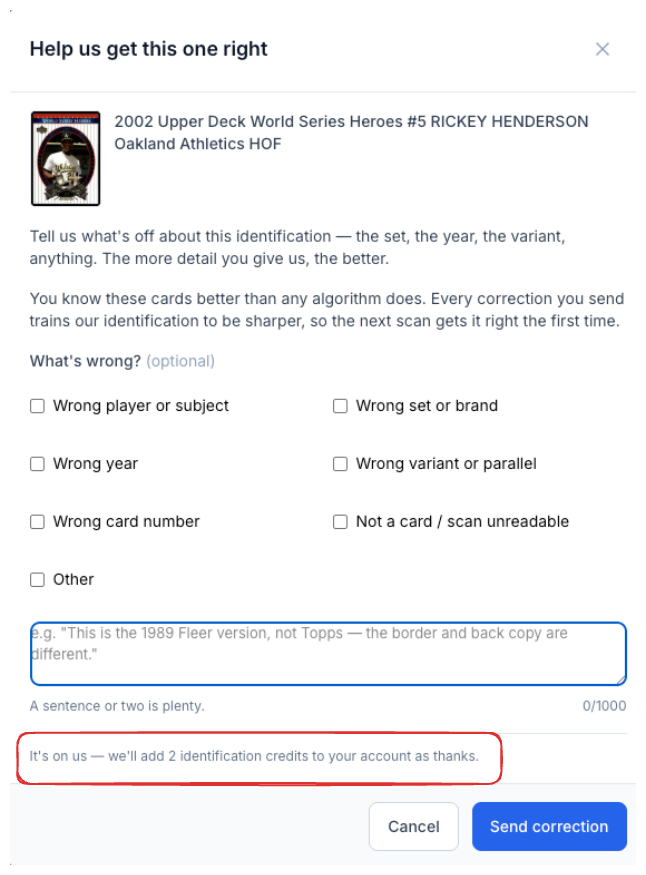
Tick what is wrong — player or subject, set or brand, year, variant or parallel, card number, or not a card at all — and add a sentence if you have one. A sentence is plenty. “This is the 1989 Fleer version, not Topps — the border and back copy are different” tells us more than a screenshot ever would.
Every box is optional. Send it with nothing but a checkbox if that is all the time you have.
Click image to view full size
Two Credits, On Us
Every correction you send adds 2 identification credits to your account. They do not expire. You spotted something our pipeline missed and took the time to write it down — that is worth something, and paying for it in the currency you actually use beats a thank-you note.
Where the Report Actually Goes
Not into a ticket queue nobody reads. The report lands in a review queue with the scan, the identification the pipeline produced, and a snapshot of exactly what it was working from when it made the call. That is the difference between “a user says this was wrong” and being able to see why it went wrong and fix the cause.
You know these cards better than any algorithm does. Corrections from dealers who can tell a 1989 Fleer from a 1989 Topps at a glance are the highest-signal data we get, and they feed straight back into the identification pipeline.
Worth Reporting
- Wrong year on a set that ran for a decade. The design barely changed, the price did.
- Base identified as a parallel, or the reverse. The parallel is often most of the card’s value — getting it wrong costs you both ways.
- Newly released sets. A set that came out last month is the hardest thing to identify. Flagging it is how it gets easier next month.
- Scans that came back as not-a-card. If the pipeline could not read it, we would rather see the scan than guess at what your scanner is doing.
The Feedback Loop Is the Product
Card identification is not a solved problem you buy once. Sets keep coming out, parallels keep multiplying, and the long tail is genuinely hard. The platforms that get better are the ones where the people holding the cards can say “no, that’s the other one” without filing a support ticket.
That is the same reason the feature request board exists. You tell us what is wrong and what is missing; we build against it.
Edit or Withdraw a Correction
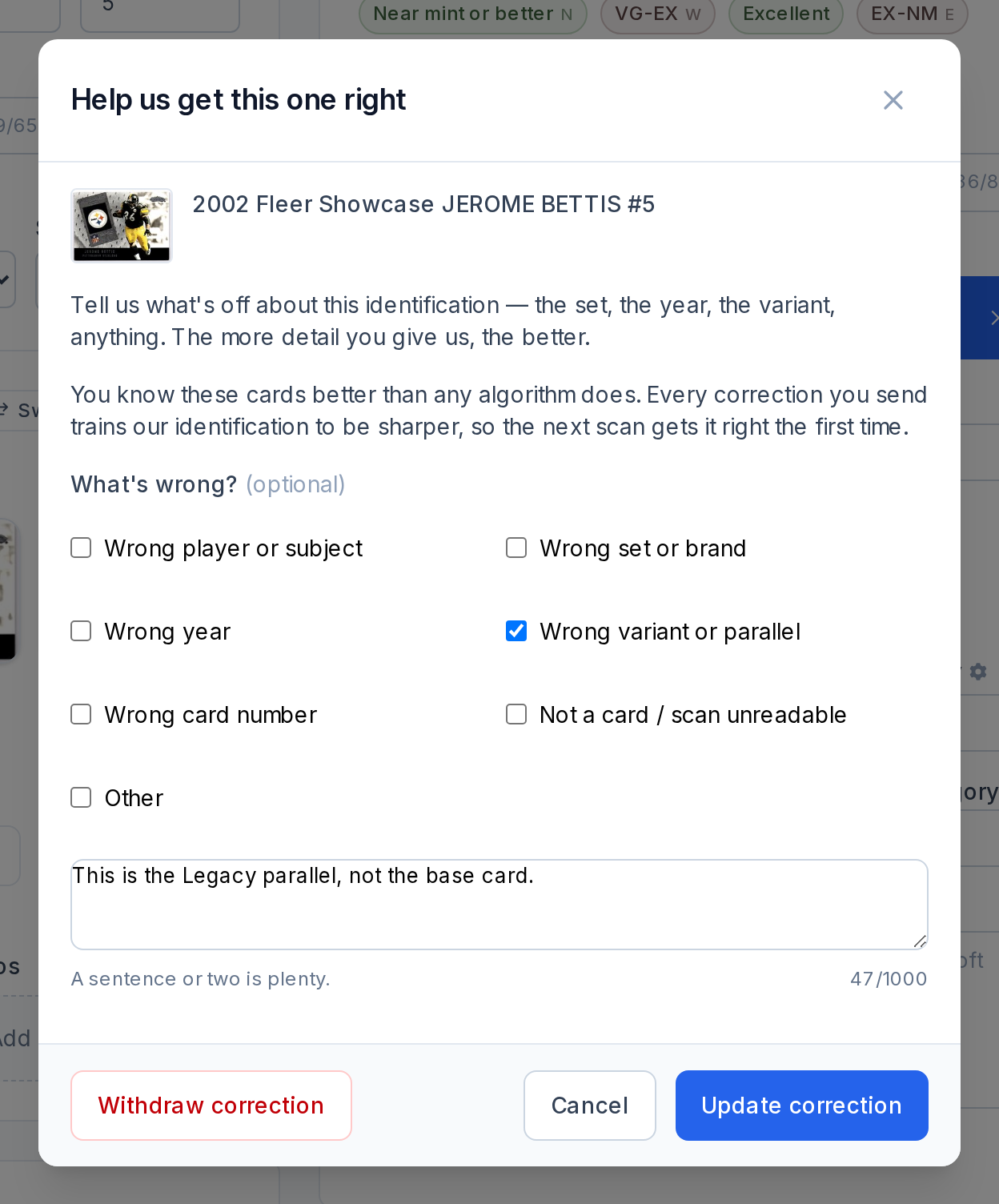
Sent a “Not Quite Right?” report and then spotted the set name you forgot to mention, or realized the ID was fine? Update or withdraw it any time until a reviewer picks it up.
Click image to view full size
Complete listings, without the cleanup.
Turn scans into eBay-ready listings with the specifics buyers filter on, then reuse clean card data in Whatnot workflows.